
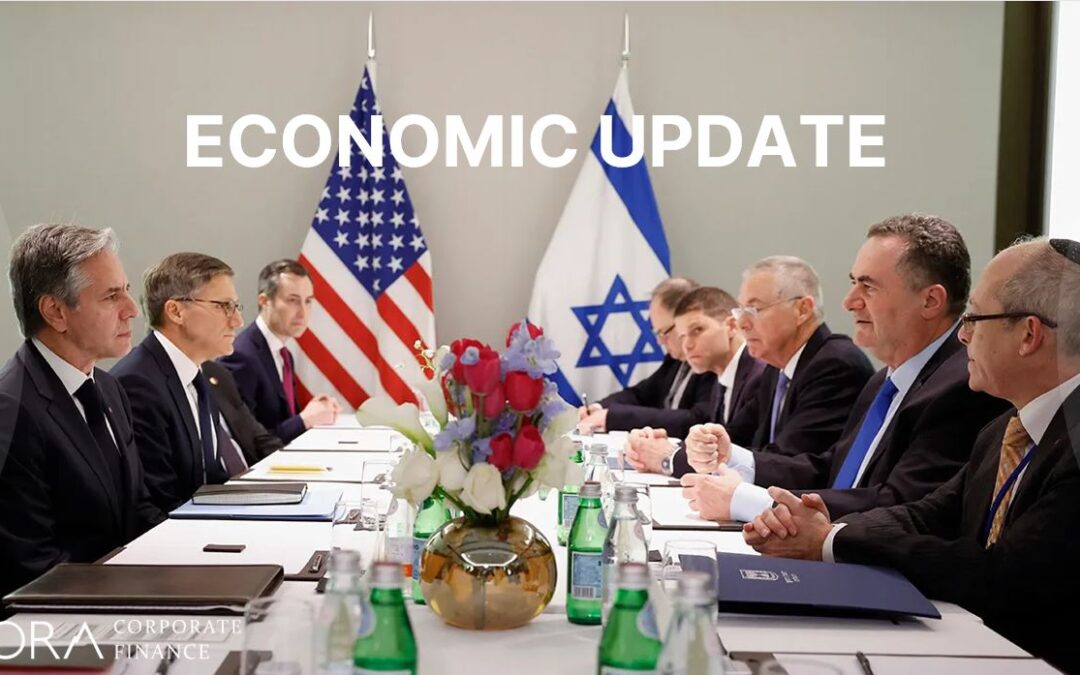
The war between Iran and the US-Israel coalition that began in late February 2026 has quickly changed the global economic landscape. While the trade deal between India and the US in January provided some relief, this new conflict has created a massive wave of fresh challenges for world markets.
The conflict has led to the effective closure of the Strait of Hormuz. This is a vital waterway that handles 20 percent of the world’s oil and 25 percent of its liquefied natural gasnatural gas. Because of the fighting, shipping companies are avoiding the Middle East and taking the long route around Africa. This adds about two weeks to travel times and has caused freight costs to jump by more than 300 percent in some areas. Insurance premiums for ships have also risen by 40 percent, making global trade more expensive for everyone. Global energy prices are also rising, with crude oil staying well above 110 dollars per barrel.
Impact for India
- The Indian government has used emergency powers to redirect oil. They are prioritizing gas for homes and hospitals while cutting supply to some factories to manage the shortage.
- In a surprising move, the US granted India a 30 day waiver in March to buy Russian oil that was stuck at sea. This was done to help India keep its energy prices stable while the Middle East is in chaos.
- Exports could see a loss of 5,000 crore rupees. Raw material costs for medicines have surged by 30 to 100 percent because shipping from China is delayed.
- Nearly 12 percent of all Indian clothing exports go to the Middle East. With shops closing in those countries, Indian textile hubs are seeing a sharp drop in new orders.
- Prices for cars and home appliances like ACs are rising by 5 to 6 percent because the plastic and chemicals used to make them are derived from expensive crude oil.
- India imports 60 percent of its Urea from the Gulf. This supply is now at risk right before the critical Kharif sowing season.
- India has an 87 percent dependency on the Middle East for Methanol and Polymers. Plastic and paint raw material costs have risen by 25 percent.
Acknowledgements:
RBI Bulletin (www.bulletin.rbi.org.in), SEBI (www.sebi.gov.in), NSE (www.nseindia.com), BSE (www.bseindia.com)
Disclaimer:
This material has been prepared by the personnel in Vora Corporate Finance which is Investment Banking arm of Vora Management Consultancy Private Limited and looks after Mergers & Acquisitions (M&A), Private Equity (PE), Fund Raising, Debt syndication and Valuations and is based out of Ahmedabad, Gujarat, India. Any views or opinions expressed herein are solely that of individual authors and may differ from view of Vora Management Consultancy Private Limited. This material is proprietary to Vora Management Consultancy Private Limited and is for your personal use only. Any distribution, copy, reprints or forward to others is strictly prohibited.
This material captures the information based on information available in the public domain, public announcements and sources believed to be reliable. Analysis contained herein is based on publicly available information and appropriate assumptions. This material is intended merely to highlight market developments and is not intended to be comprehensive and does not constitute strategic, investment, legal or tax advice. In no event Vora Management Consultancy Private Limited be liable for any use by any party or for any decision made or action taken by any party in reliance upon, or for any inaccuracies or errors in, or omissions from, the information contained herein and such information may not be relied upon by you for evaluating any transaction.